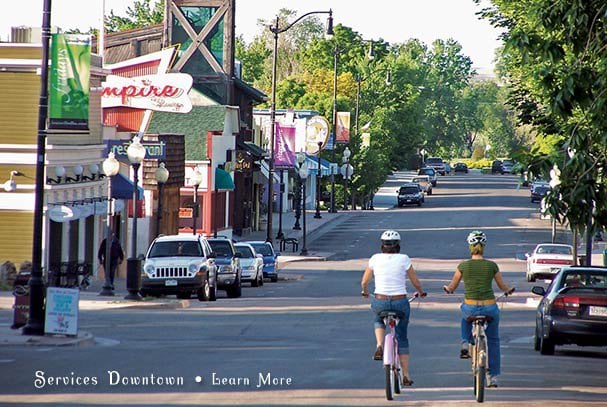
If you've spent ten minutes on Main Street in Old Town Louisville, you understand why this neighborhood ends up on every "best places to live" list that gets written about Colorado. Five walkable blocks of historic storefronts, restaurants that have a real local following, the Friday Street Faire on Front Street in summer, the holiday lights and parade in December, and surrounding streets full of late-1800s and early-1900s coal-mining-era homes — many beautifully restored, some still original — make this one of the most-loved pockets of housing in all of Boulder County.
I've been in real estate for about twenty years, with the last ten right here in Colorado, and Old Town is the neighborhood I get the most "I'd live here in a heartbeat if the right house came up" comments about. The trick is that the right house doesn't come up often, and when it does, it moves fast. This is the guide I should have written years ago for every buyer who's asked me about Old Town.
What Old Town actually is
Old Town is the original "Downtown" Louisville — the historic core that dates back to the founding of the town in 1878 as a coal mining settlement. The boundaries that locals use roughly center on Main and Front Streets, running from Elm up to South Street. Inside that footprint you'll find the commercial heart of Louisville (Main Street itself), the Louisville Historical Museum, Memory Square Park, and roughly twenty blocks of mostly residential streets.
The housing stock is older than anywhere else in Louisville and arguably anywhere else in Boulder County outside of Mapleton Hill in Boulder. You'll find original miner's cottages from the 1880s and 1890s (small, square, often modest), bungalows from the 1910s and 1920s, post-war ranches from the 1940s and 1950s, and a handful of recent custom "scrapes" where someone bought a teardown lot, across a single or sometimes a double lot. Many of the original homes have been thoughtfully renovated — opened up, modernized, additions tucked into the back — while keeping the front-of-house historic character that the town's design overlay protects.
The feel
What makes Old Town different from any other neighborhood in Louisville — or really anywhere in Boulder County at this price point — is the combination of walkability and small-town character. From most of the residential streets you can walk to Main Street in five to ten minutes. That means you can grab dinner at Lucky Pie or Waterloo without driving, you can be at Friday Night Street Faire by foot on summer evenings, you can hit the Louisville Farmer's Market on Saturday morning, and your kids can ride bikes to the library and Tilt Pinball Arcade.
Streets are tree-lined and quiet, even though Main Street is two blocks away. Front yards tend to be modest but well-kept, and there's a strong neighborhood culture of porch sitting, dog walking, and chatting with neighbors. Many residents have been there for decades. Friday Night Street Faire or Concerts in Community Park in the summer are two of those events that defines what living here is like — evenings of live music, families on picnic blankets, sparks flying off heels on the makeshift dance floor, and that distinct small-town spirit that's hard to find inside a 30-minute commute to Denver.
What you'll find for sale
Old Town inventory is tight. Most months see only a handful of active listings, sometimes none. When homes do come on, they don't last — well-priced homes in good condition routinely go under contract within one to two weeks, often with multiple offers.
For broader context: as of March 2026, Louisville's median sale price was $878,000 (up 0.6% year-over-year), and homes were averaging 32 days on market — meaningfully faster than the 39 days they averaged a year earlier. Twenty-two homes sold in March, down from 28 in March of the prior year. Inventory is the binding constraint, not buyer demand.
Old Town consistently trades above the Louisville median because of the walkability and historic-character premium. Single-family homes in Old Town typically trade in the $900,000 to $1.5 million range, with the bulk of activity in the $1 million to $2 million band for a renovated 3- or 4-bedroom historic home. Original-condition homes that need work sometimes start in the $700s. Newly built custom homes or fully reimagined historic restorations can run from $1.5 million up past $3 million depending on size, finish level, and lot.
Market data as of March 2026. Reach out for current numbers on a specific block, era, or price range — I track every sale in the historic core and can send a tailored report within a day.
Main Street: the food, the events, the daily life
The five blocks of Main Street between Pine and Walnut are what make Old Town Old Town. A quick tour through the names locals recognize: The Huckleberry for coffee, breakfast, and one of the most reliable morning spots in the entire Front Range. Moxie Bread Co for sourdough and the carb-plus-coffee morning ritual. Lucky Pie for pizza and a more grown-up bar atmosphere. Waterloo for elevated American food in a sleek setting. 740 Front for craft cocktails and small plates. Zucca for Italian. Verde for Mexican. Pica's for the casual taco-and-margarita fix. Sweet Cow Ice Cream for the family dessert run. Lulu's BBQ for the smoked-meat staples. And Nora's Speakeasy — exactly what it sounds like — for a proper night out tucked behind an unmarked door.
Past the restaurants you'll find independent retail — clothing, books, gifts, home goods — that hasn't yet been displaced by chains. The Louisville Public Library and the Louisville Historical Museum sit just off Main Street and are both worth a visit.
The recurring events shape the year. Summer brings Friday Night Street Faire on Front Street (eight evenings of live music, food, and that small-town spirit that's hard to fake) and the Louisville Farmer's Market on Saturday mornings — local agriculture, small businesses, live music, all in walking distance. Winter brings the holiday lights, the parade, and an outdoor ice rink — one of the most-attended community traditions of the year. Throughout the year there are smaller events that give the neighborhood a steady rhythm.
Schools
Old Town falls within the Boulder Valley School District (BVSD) attendance area. Most addresses route to Louisville Elementary at the elementary level, Louisville Middle School at the middle school level, and Monarch High School at the high school level. All three schools have strong reputations and consistently rank well. The walkability factor is real here — many Old Town families have kids who walk or bike to Louisville Elementary, which is itself only a few blocks off Main Street.
Getting around
Old Town's commute access is the practical anchor that's held its value through every market cycle. McCaslin Boulevard, the main commercial corridor running east-west, is a five-minute drive and connects you to US-36 (the Boulder-Denver Turnpike) within another five minutes. That puts downtown Boulder roughly 15 minutes north and downtown Denver 30 to 40 minutes south depending on the time of day.
For people who don't want to drive, Old Town is one of the few Boulder County neighborhoods where you can realistically run errands and have a social life on foot. The Coal Creek Trail runs along the south side of Old Town and gets you to Boulder by bike via a paved trail in well under an hour. RTD bus service along South Boulder Road provides options into Boulder and to the FlatIron Crossing area.
The Marshall Fire and what it changed
In December 2021, the Marshall Fire — the most destructive wildfire in Colorado history — swept through parts of Louisville and Superior. The areas hit hardest were the newer subdivisions on the south and west sides of town. Old Town itself was largely spared by the fire, though residents lived through the evacuation alongside everyone else in town and several outlying streets near the historic core sustained damage.
The fire changed several practical realities for Louisville home purchases. Insurance availability and premiums have shifted; defensible space, fire mitigation, and how a home is configured for ember exposure are now standard parts of any inspection conversation. I walk every buyer through what's changed and what to look for. None of it should discourage anyone from moving to Louisville — the town has recovered with extraordinary energy and the rebuild is reshaping parts of the community in real-time — but the conversation is different now than it was in 2020, and it's worth having early.
Comparing Old Town to North End
The two most-asked-about Louisville neighborhoods are Old Town and North End — and they couldn't be more different. Old Town offers historic character, walkability, smaller lots, and a 100-year-old streetscape. North End offers newer construction (Phase 1 built around 2008, Phase 2 around 2014), larger floor plans, an HOA-managed community, and the same access to trails and Old Town's amenities — just a few minutes farther away.
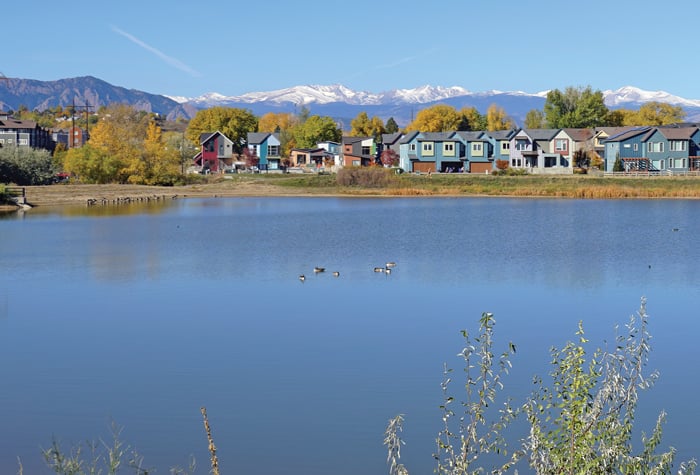
Which one is right depends on what you're optimizing for. Buyers who want to walk to dinner, value historic character, and don't mind a smaller home tend to land in Old Town. Buyers who want a newer build with a 2010s-era floor plan, slightly larger lots, and easy access to Hecla Lake tend to land in North End. Both neighborhoods hold their value well; both have strong school assignments; both have an active resale market. For more, see the full North End Louisville subdivision guide on this site.
Things to know before you buy in Old Town
Older homes come with older systems. Many Old Town homes have been thoughtfully updated — new electrical, modern HVAC, updated plumbing — but plenty haven't. Knob-and-tube wiring, original boilers, single-pane windows, and clay sewer lines are all things to check carefully during inspection. I always bring in inspectors who know historic homes for any Old Town purchase.
The historic overlay protects the character of the neighborhood and that's part of why prices are what they are — but it also means certain renovations and additions require additional review and approval. If you're buying with significant plans to alter the front facade or add height, get clear on what's allowed before you write the offer.
Frequently asked questions
Why are Old Town Louisville homes more expensive than other parts of Louisville?
The combination of walkability to Main Street, historic character, mature trees, smaller-town feel, great schools, and limited inventory all support premium pricing. Old Town is a finite supply — the neighborhood isn't being expanded — and demand for walkable historic neighborhoods in Boulder County is high.
What's the median home price in Louisville right now?
Louisville's median sale price in March 2026 was $878,000, up 0.6% year-over-year. Old Town consistently trades above that median because of its historic character and walkability — most renovated Old Town single-family homes land between $1.5 million and $2 million, with smaller miner's cottages and original-condition homes coming in lower and larger custom builds running higher.
How fast do Old Town homes sell?
Inventory is tight and well-priced homes in good condition often go under contract within one to two weeks. Multiple offers are common, particularly in the spring market. For broader context, Louisville's overall market averaged 32 days on market in March 2026 (down from 39 days a year earlier).
Did the Marshall Fire affect Old Town?
Old Town was largely spared by the fire, though residents lived through the evacuation. The neighborhoods most affected were the newer subdivisions on the south and west sides of town. Fire mitigation, defensible space, and insurance considerations are now standard parts of any Louisville purchase conversation.
Can I renovate or add on to an Old Town historic home?
Many Old Town homes have been thoughtfully renovated and expanded. The town's historic preservation overlay does require additional review for changes to the front facade and certain other alterations. I help buyers understand what's allowed before they make an offer if renovation plans are part of the picture.
Thinking about buying or selling in Old Town?
Twenty years in real estate, the last ten right here in Colorado, and Old Town is one of the pockets I know best — the streets, the houses, the renovations, the off-market opportunities. If you're considering a move into the neighborhood or thinking about what your Old Town home might be worth in today's market, I'd be glad to talk.